

Stop the Number 1 Cause of Residential Fires Before Your Crew Rolls
Kitchen fires are the leading cause of residential structure fires, but traditional safety education relies on human behavior that often fails under pressure. FireBot provides a proactive engineering solution that neutralizes the threat at the source, allowing your department to "get ahead of the call".
Firefighter Interest Form
"*" indicates required fields
The Macro-Economic Burden of Residential Cooking Fires
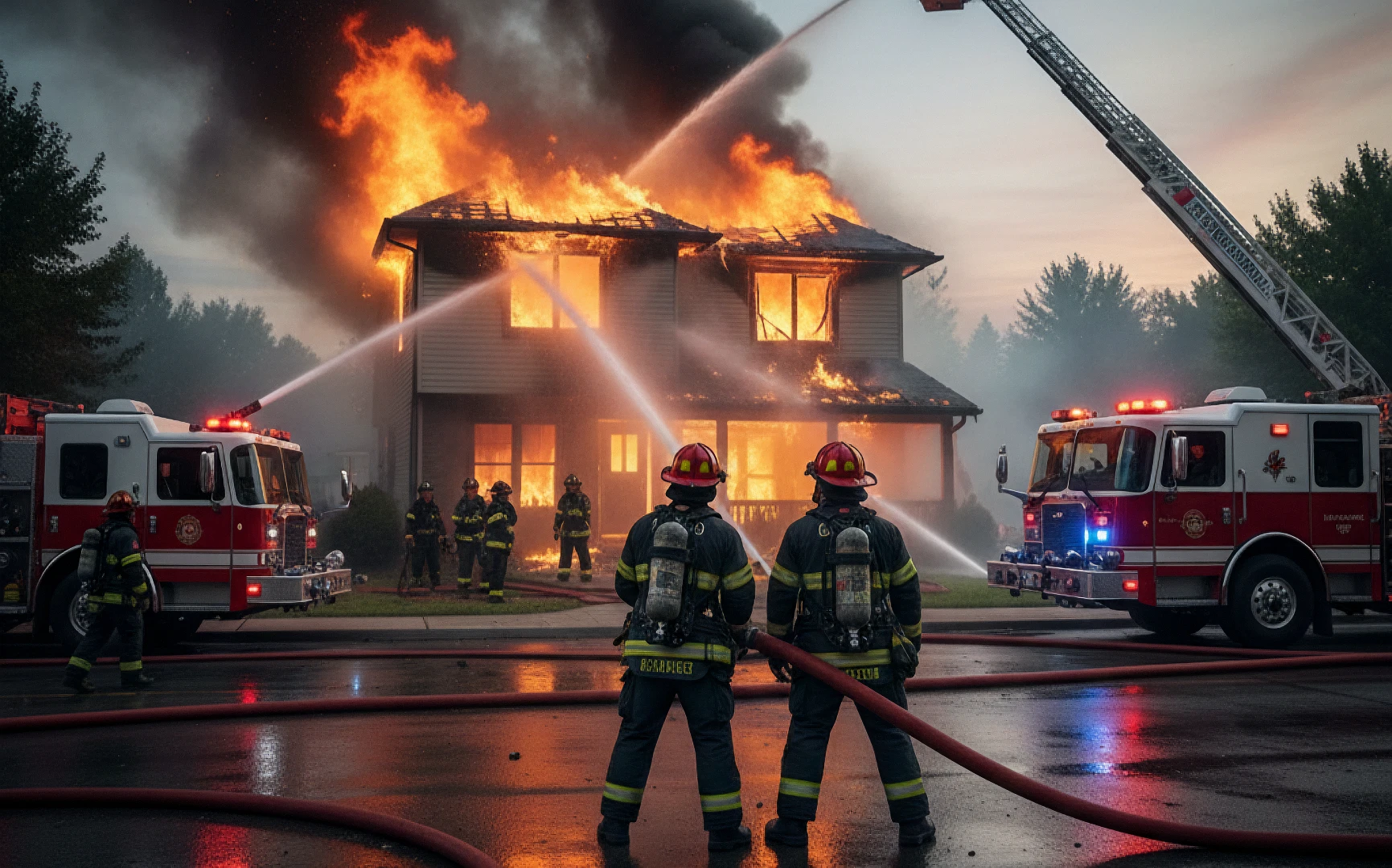
Automated stovetop suppression is essential given the high statistical density of residential kitchen fires. NFPA and FEMA data from 2017-2021 show an estimated annual average of 158,400 home cooking fires, resulting in 470 deaths, 4,150 injuries, and over $1.15 billion in property damage. The stovetop is the critical risk area: ranges/cooktops were involved in 53% of home cooking fires, yet accounted for a disproportionate 88% of cooking fire deaths and 74% of injuries, indicating a rapid transition to life-threatening events compared to other kitchen appliances. The following points further outlines the impact of cooking fires versus other residential fire causes.
While smoke alarms are vital for notification, they cannot stop a grease fire from escalating into a structure fire. National fire data highlights the severity of the stovetop problem:
Leading Fire Cause
Cooking accounts for 44% to 49% of all reported home structure fires in the United States.
The Deadly Cooktop
Ranges and cooktops are involved in 88% of all cooking fire deaths and 74% of all cooking fire injuries.
Response Load
Local fire departments respond to an average of 158,400 to 172,900 home cooking fires every single year.
Vulnerable Demographics
Adults aged 85 and older face a 5.5 times higher risk of dying in a cooking fire compared to the general population.
Professional Engineering: The UL-300A Standard
Dual Smart Thermal Sensors
Unlike old-fashioned fuse technology, FireBot uses smart sensors that process thousands of data points every second to distinguish between intense cooking and a dangerous fire.
Proprietary Suppression Agent
The system deploys 1 liter of a non-toxic, biodegradable liquid that smothers flames, cools the surface, and applies a surfactant to prevent dangerous reflashes.
20 Year Operational Life
Designed for long-term Community Risk Reduction, the system features a 20-year service life with a single maintenance refresh at the 10-year mark.
Battery Powered Reliability
A 10-year battery ensures the system remains operational during power outages, with no professional wiring or plumbing required for installation.
Community Risk Reduction: A Force Multiplier for Your Department
01
Reduce Emergency Calls
Wide-scale deployment of FireBot has the potential to reduce fire department responses to home fires by up to 50%.
02
Preserve Response Resources
By suppressing fires at the source, you keep your crews and apparatus available for high-priority life-safety calls and complex rescues.
03
Minimize Firefighter Risk
Every kitchen fire neutralized by FireBot is one less structure fire that exposes your crew to “hot” responses, occupational hazards, and potential injuries.
04
Resident-Proof Protection
The tamper-resistant design ensures continuous protection that does not rely on resident compliance, training, or physical mobility.
Secure Your Funding and Protect Your Community
Strategic Asset Protection: Eliminating Secondary Damage
FireBot fills the critical gap between detection and commercial-scale suppression, protecting property and reducing long-term costs:

Sprinkler Cost Avoidance
FireBot is engineered to activate before residential sprinkler systems. By using just 1 liter of liquid agent, it prevents the room temperature from reaching the threshold that triggers a massive, corrosive water discharge.
Insurance Premium Mitigation
Installation can lead to 5% to 15% savings on property insurance premiums by demonstrating proactive risk management.
Made in the USA
Every unit is designed, tested, and assembled domestically to meet the highest professional standards.
The Best Recommendation a Firefighter Can Make: Kill the Fire Before the Tones Drop

FEMA Assistance to Firefighters Grants (AFG
Learn how to align stovetop suppression with AFG operations and safety goals.

Fire Prevention and Safety (FP&S) Grants
Discover strategies to target high-risk demographics like seniors and low-income housing.

State-Specific Safety Programs
Access a list of state-level funding opportunities designed for firefighter safety equipment.
Firefighter Interest Form
"*" indicates required fields